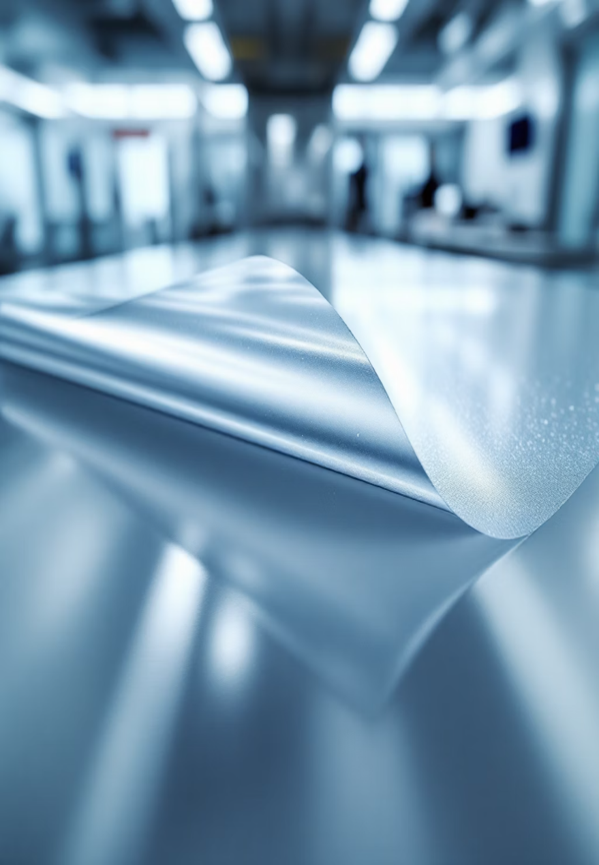
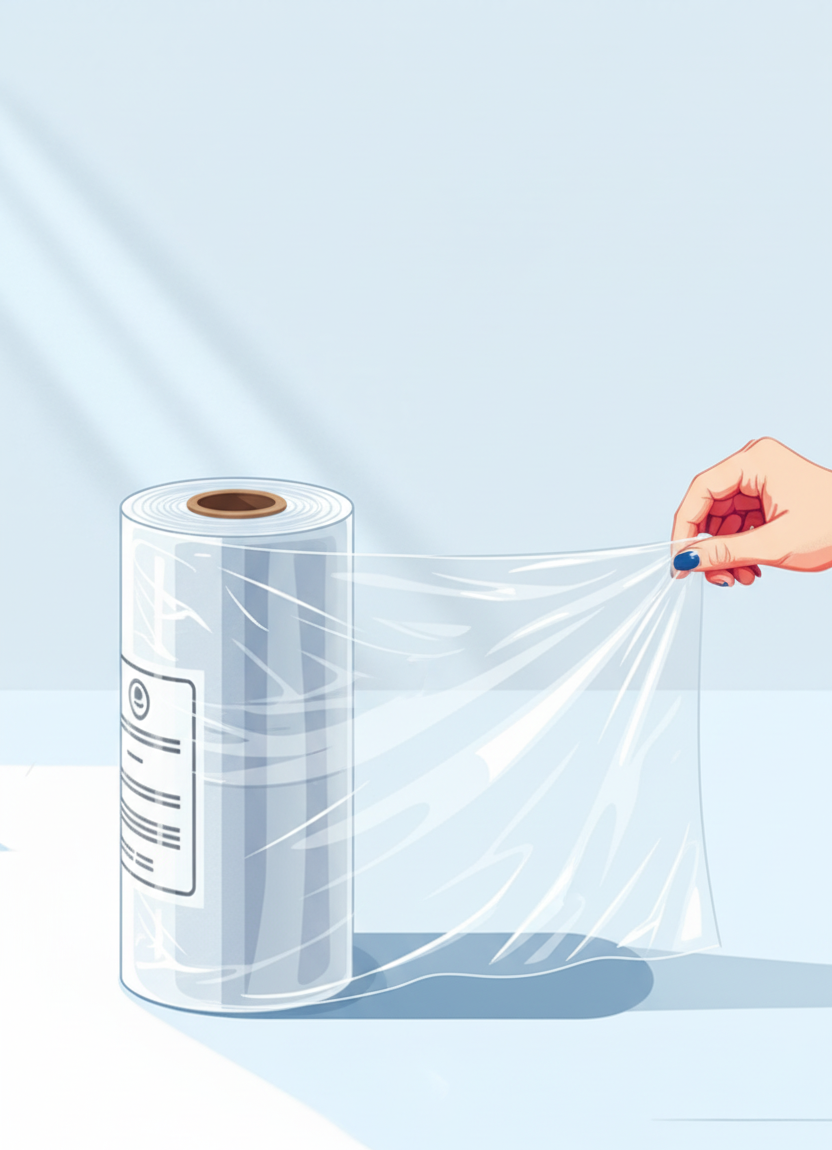
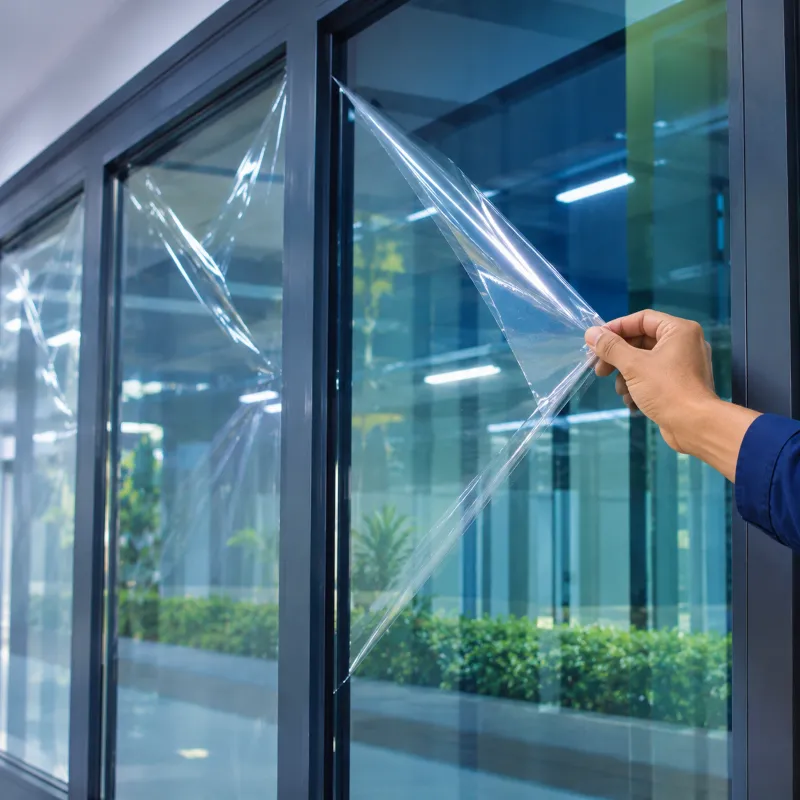
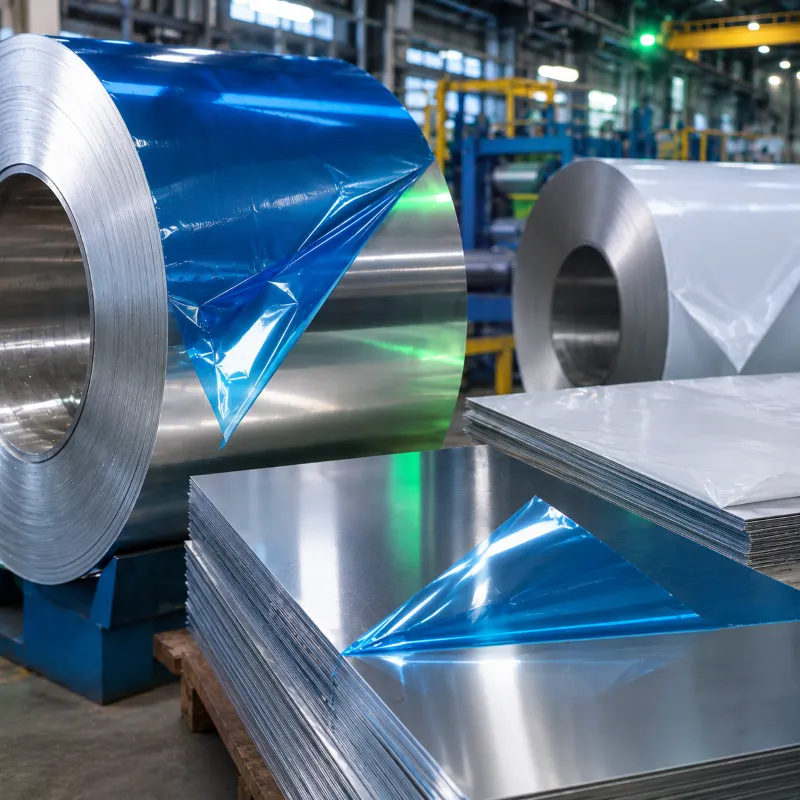
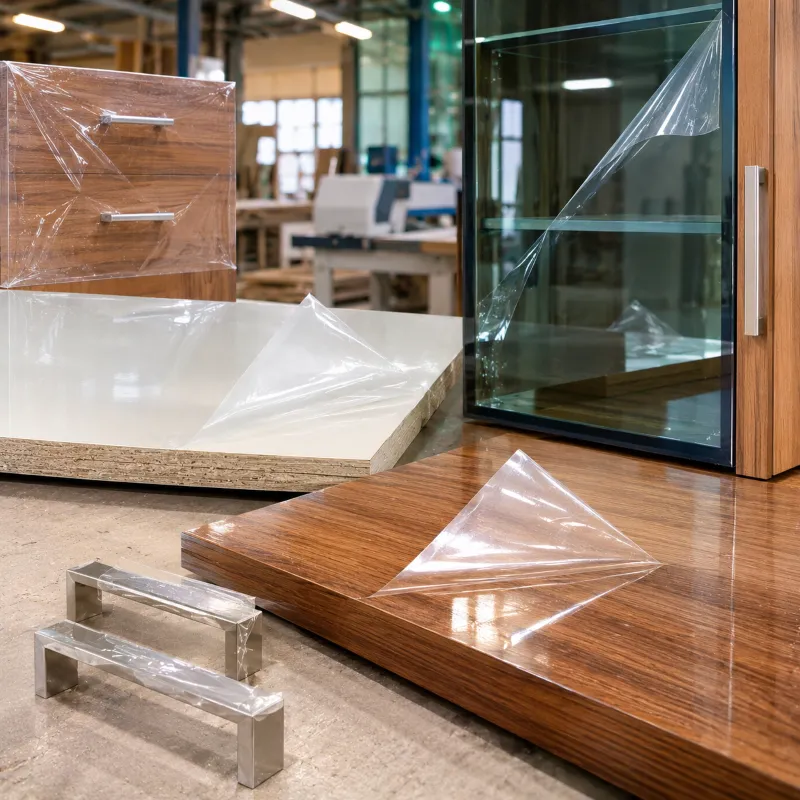
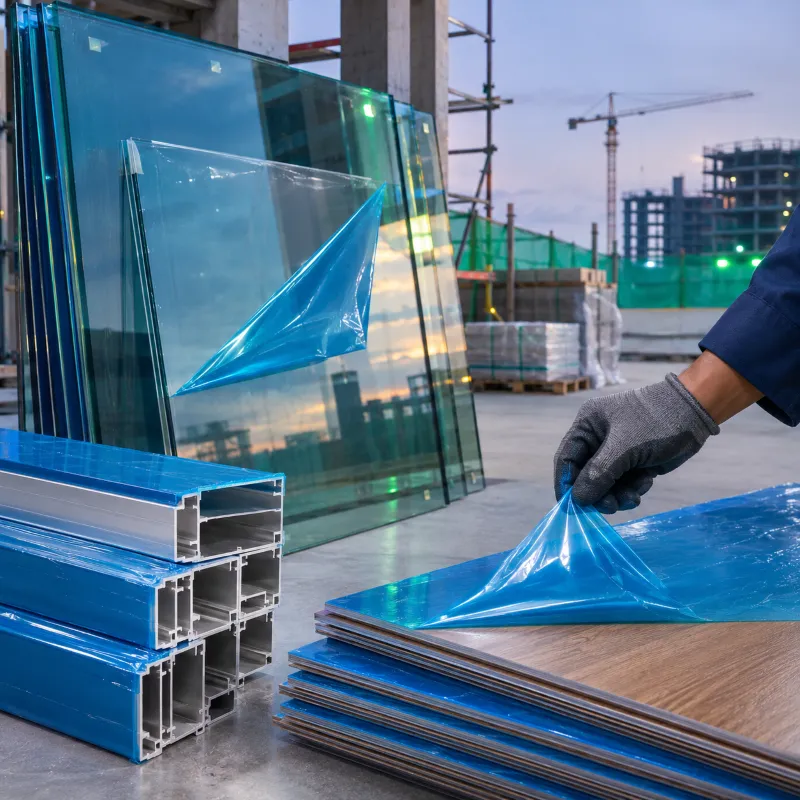
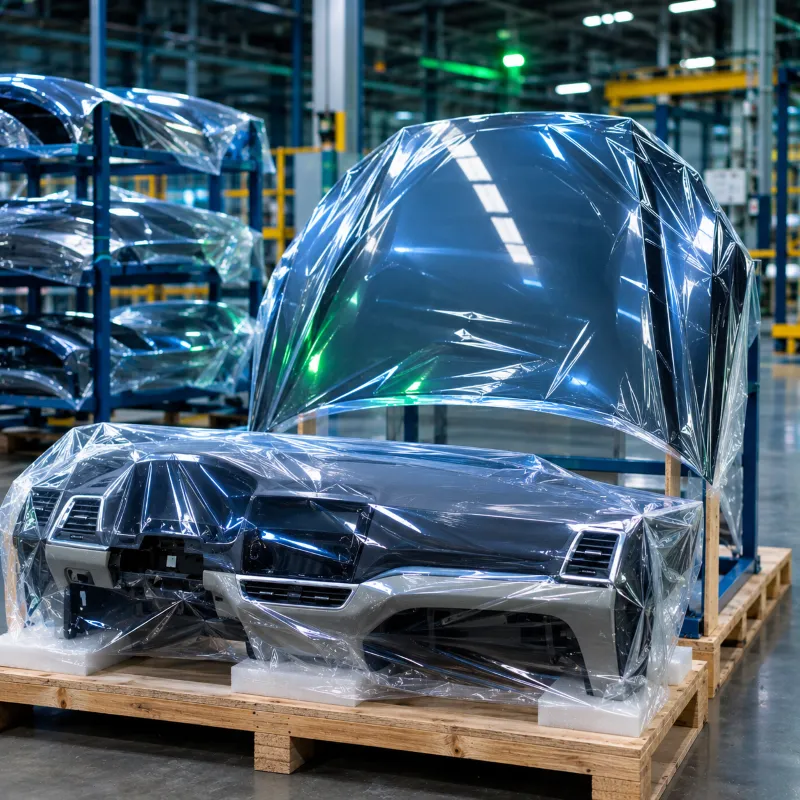
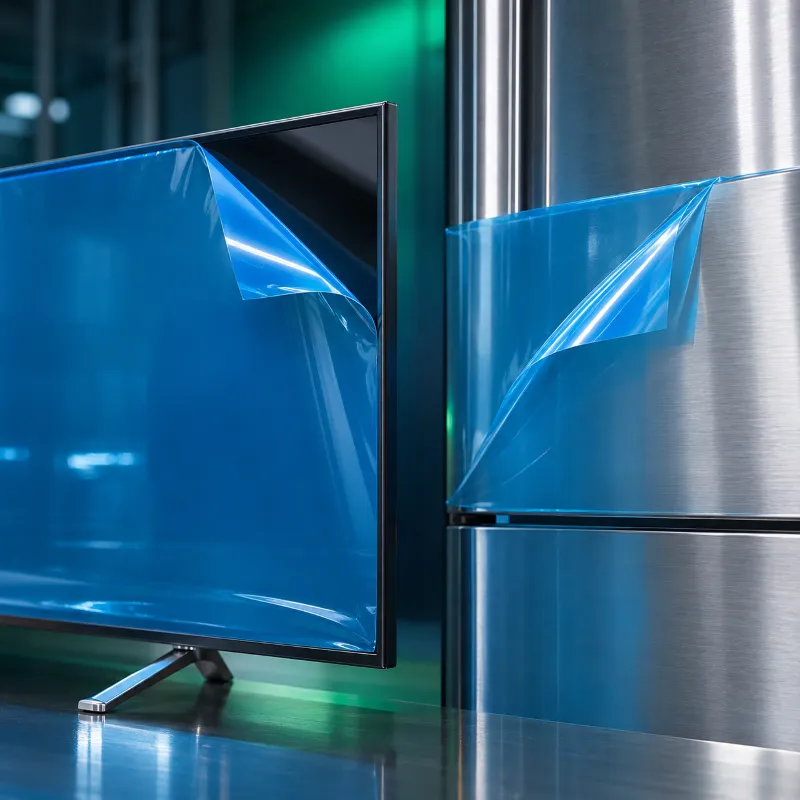
Surface protection film is a temporary self-adhesive plastic film applied to delicate or finished surfaces to prevent damage during the various stages of manufacturing, processing, transit, storage, and installation. Also known as masking film or protective film, it acts as a removable barrier shielding the underlying surface from scratches, dust accumulation, dirt particles, moisture exposure, mechanical abrasion, and UV degradation.
The film is engineered with a polyethylene base material - typically LDPE (Low-Density Polyethylene), HDPE (High-Density Polyethylene), or a co-extruded multilayer polyethylene structure - that provides flexibility, conformability, and tear resistance. Depending on the application, the film either uses a low-tack acrylic adhesive coating or relies on static cling (non-adhesive) for residue-free removal.
Surface protection films are widely used by manufacturers, fabricators, glaziers, furniture producers, sheet metal processors, automotive OEMs, and construction material suppliers. They are essential for high-value finished surfaces such as stainless steel sheets, mirror glass, painted aluminium, polished wood panels, and architectural composite panels (ACP), where even minor surface damage can render an expensive product unsellable.